Learn what an NREN is and how AARNet operates Australia’s national research network
This inaugural Reflect RAP marks the beginning of AARNet’s formal commitment to reconciliation
Log in to view details about your AARNet services, including usage reports
Log in to send files of any size, quickly and securely
Log in to update institution information or view a map of eduroam locations
Browse answers to frequently asked questions about our products and services
Check the current performance status for our services
Fast local access to popular international open-source content
Check to see if a web address is on-net
An online exhibition is giving audiences the chance to revisit Australian CD-ROM artworks from the 1990s through EaaSI, an emulation platform hosted in Australia by AARNet.
Professor Melanie Swalwell from Swinburne University and her longtime collaborator, Dr Helen Stuckey from RMIT, have curated an online exhibition of ten Australian CD-ROM media artworks titled “Revisiting Australian CD-ROM Art from the 1990s”. The exhibition is a major output of their Australian Research Council (ARC) Linkage Project “Archiving Australian Media Arts: Towards a method and national collection”. As Australia’s national research and education network, AARNet is proud to support the Emulation as a Service Infrastructure (EaaSI) initiative, helping to make exhibitions like this possible.
“CD-ROMs were an important intermediate storage technology in the 1990s that allowed for experimentation with digital sound and image,” Dr Stuckey says. “They were considered a critical part of Australians becoming skilled in digital media and featured prominently in the 1994 “Creative Nation” policy as the medium that would train artists and other creatives for the digital future.”
As with most vintage computer media, CD-ROMs are now mostly obsolete, as they require 1990s operating systems and computers. Melanie Swalwell explains, “the artworks are no longer accessible on contemporary computers. What makes this exhibition of artworks possible is emulation, specifically the platform known as EaaSI (‘easy’).”
Professor Swalwell leads the infrastructure project which makes this emulation possible. In Australia, EaaSI is hosted by AARNet to support researchers in universities and the galleries, libraries, archives and museums (GLAM) sector to access content with legacy hardware and software dependencies.
“We’re excited to be able to bring this important chapter in Australian art history back from the brink so that people can once again experience the artworks,” comments Melanie.

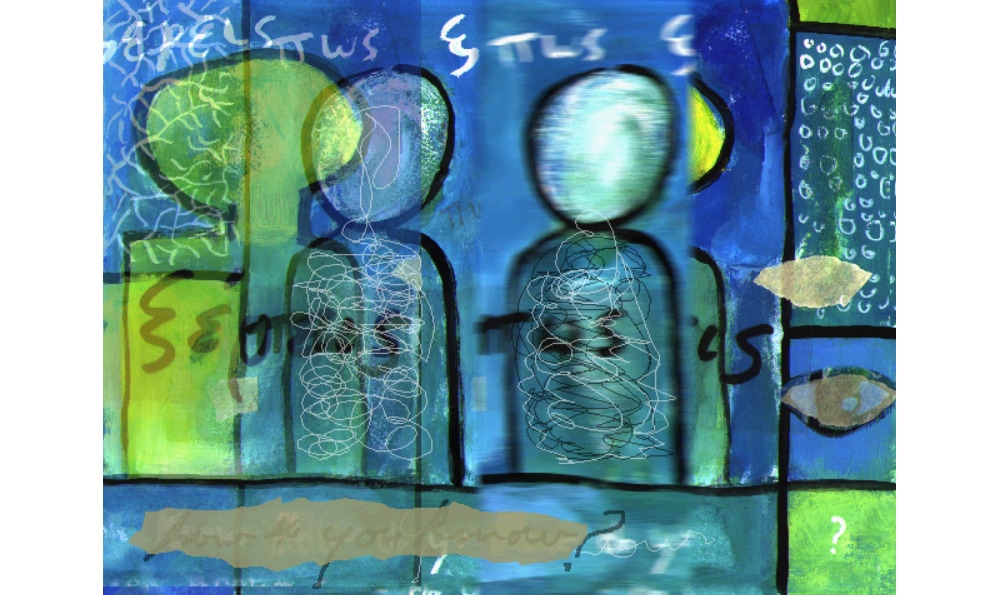
Above: Screenshot from Norie Neumark (1998) “Shock in the Ear”, Mac OS9 emulated in EaaSI. Feature image: Screenshot from Troy Innocent (1994) IDEA_ON>!, Mac OS9 emulated in EaaSI. Credit: Swinburne University with permission of the artists.
The "Revisiting Australian CD-ROM Art of the 1990s" collection is available to view through EaaSI.